Building With Stone vs Alternatives: Complete Comparison
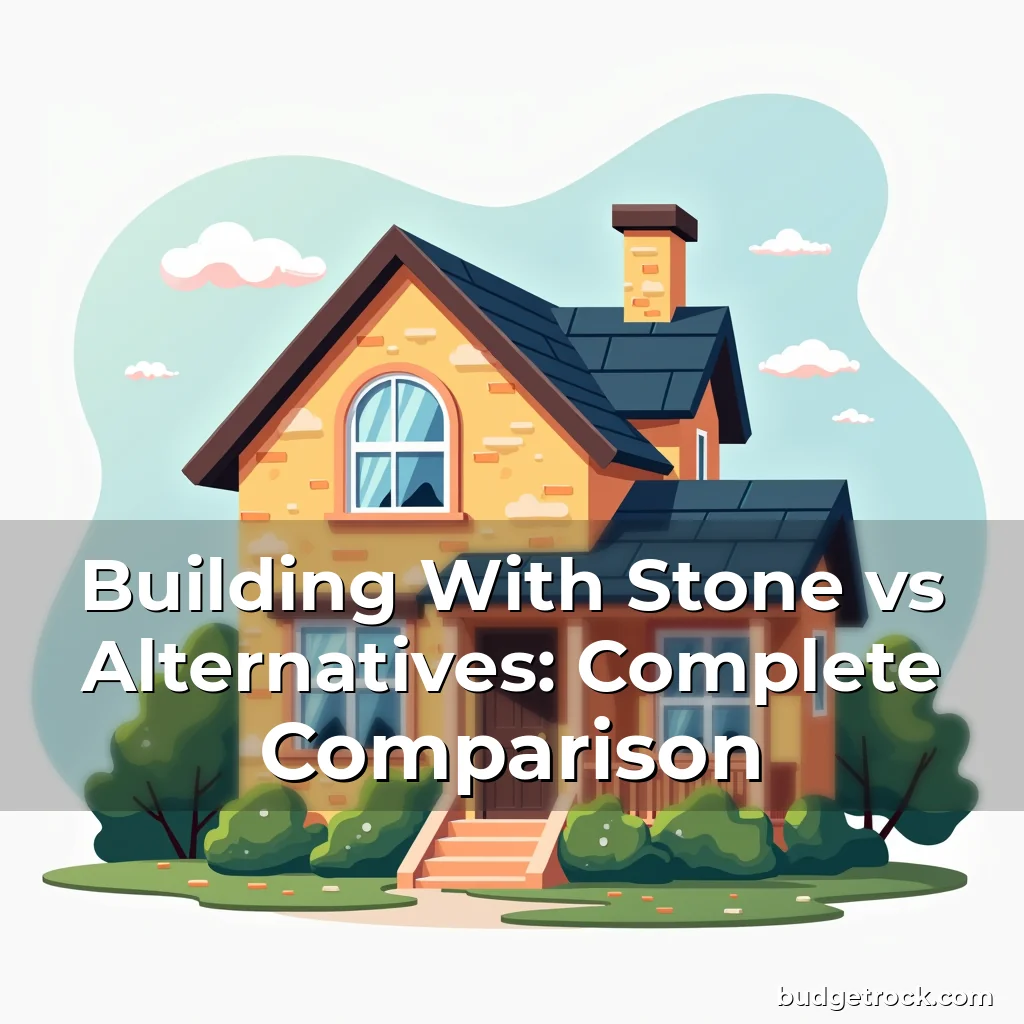
When considering building materials, the choice between stone and alternatives can significantly impact both cost and long-term value. This article explores how stone compares to other materials like concrete, brick, wood, and composite options.
Budget-conscious homeowners often weigh durability against upfront costs when deciding on construction materials. Understanding these trade-offs helps make informed decisions that align with financial goals.
The Cost Factor: Upfront Expenses vs Long-Term Savings
Stone is typically more expensive than materials such as concrete blocks or treated lumber. However, its longevity reduces replacement needs over time.
Initial investment in natural stone might seem steep, but maintenance-free qualities lower lifetime expenses compared to less durable choices.
Concrete offers an affordable alternative with good structural integrity at a fraction of the price of quarried rock.
Brick provides mid-range pricing while offering aesthetic appeal similar to certain types of stone finishes.
For those seeking even greater savings, engineered composites mimic stone’s appearance without high material costs.
Wood remains popular due to its low initial outlay though requires regular upkeep which adds hidden costs over decades.
- Natural stone: High upfront cost but minimal ongoing maintenance requirements.
- Concrete: Lower purchase price yet may need periodic sealing treatments depending on use case.
- Treated timber: Economical initially but susceptible to rotting unless properly maintained annually.
- Composite products: Affordable imitations capable of replicating stonework aesthetics effectively.
Durability Analysis Across Materials
Stones like granite or limestone are renowned for their resistance against weathering effects including freeze-thaw cycles common in colder regions.
Masonry units made from fired clay bricks demonstrate exceptional strength under normal wear conditions although they crack easily during seismic events.
Timber structures require careful treatment methods involving preservatives to extend service life beyond typical spans seen in untreated versions.
Cement-based composites show promise through enhanced tensile properties achieved via fiber reinforcement techniques now widely used across modern projects.
Comparative Life Expectancy Data
According to industry reports published by leading architectural associations, average lifespans vary considerably among different substances:
Natural stones last anywhere from 80 years upwards provided there isn’t excessive moisture exposure affecting them negatively.
Fired bricks generally hold up well for around 60-70 years before showing signs of deterioration requiring repair work.
Engineered woods constructed using advanced bonding agents could reach approximately 40 years assuming optimal care practices were consistently applied.
In contrast, basic unmodified softwoods rarely survive past two decades without significant degradation issues emerging prematurely.
Aesthetic Appeal And Customization Options
The visual characteristics offered by various construction elements play crucial roles influencing property values positively especially within residential settings.
Quarried rocks present unmatched versatility allowing builders freedom to create unique designs matching client preferences precisely.
Laminated panels available today feature digital printing technologies enabling replication of almost every kind of real stone texture accurately.
Traditional masonry walls tend towards uniformity limiting creative expression possibilities unless special orders are placed ahead-of-time.
Prefabricated wooden facades come prefinished making installation quicker however lack depth variations found naturally occurring minerals possess inherently.
- Custom shapes: Natural rock formations permit carving intricate patterns tailored specifically toward individual tastes.
- Color variation: Both genuine and synthetic replicas offer wide spectrum selections catering diverse decorating styles simultaneously.
- Surface finish: Polished versus rough textures add dimensionality enhancing overall curb appeal dramatically.
- Design flexibility: Digital modeling software facilitates visualization experiments prior actual implementation occurs safely.
Eco-Friendly Considerations In Material Selections
Sustainable development trends have shifted attention towards environmentally responsible sourcing strategies whenever possible nowadays.
Locally sourced stones contribute minimally carbon footprint since transportation distances remain limited thereby reducing emissions associated moving goods globally.
Recycled aggregates derived from demolished buildings represent viable eco-options proving effective replacements conventional raw resources otherwise extracted freshly.
Solid wood harvested responsibly follows strict guidelines ensuring regrowth rates match consumption levels maintaining ecological balance sustainably.
Manufactured composites sometimes contain recycled plastics decreasing dependency virgin polymer production processes commonly linked pollution problems.
- Carbon neutrality: Certain regional deposits qualify carbon neutral status because extraction operations don’t produce greenhouse gases.
- Renewable supplies: Fast growing trees managed properly serve renewable feedstocks suitable green initiatives promoting sustainability efforts broadly.
- Waste reduction: Reclaimed components repurposed creatively eliminate landfill contributions preserving environmental health effectively.
- Low energy manufacturing: Some composite producers employ solar powered facilities minimizing electricity usage involved producing final product efficiently.
Installation Complexity And Labor Requirements
Professionals trained specifically handling heavy loads perform installations professionally guaranteeing safe results reliably.
Skilled artisans required laying foundation courses correctly distribute weight evenly preventing potential collapse hazards later down road.
Basic tools sufficient completing simple DIY projects however complex arrangements demand specialized equipment increasing project difficulty notably.
Proper mortar mixing essential achieving strong bonds holding together each unit securely reinforcing structure adequately resisting external forces acting upon it constantly.
Regular inspections recommended monitoring condition periodically identifying early warning indicators needing immediate intervention promptly.
- Professional grading: Ensuring correct slope prevents water accumulation damaging underlying framework permanently.
- Structural reinforcement: Steel reinforcements added strategically enhance load bearing capabilities improving safety margins substantially.
- Weatherproofing measures: Applying sealants protects surfaces prolonging useful lifespan mitigating damage caused prolonged exposure elements.
- Quality control checks: Routine testing confirms compliance standards ensuring reliability consistency throughout entire construction process seamlessly.
Regional Availability And Sourcing Strategies
Varying geological compositions determine what kinds stones accessible locally impacting availability greatly.
Coastal areas rich marine sediments yield distinct varieties unlike inland locations dominated continental drift shaped landscapes predominantly.
Consulting local quarry operators reveals current stock inventories helping identify appropriate candidates fitting particular design specifications ideally.
Transportation logistics affect total expenditure incurred acquiring bulk quantities necessitating careful evaluation beforehand making purchases wisely.
Some communities support small scale artisan workshops fostering community engagement while supplying quality handmade pieces competitively priced fairly.
- Local suppliers: Establish relationships with nearby vendors gaining access exclusive deals unavailable elsewhere conveniently.
- Seasonal fluctuations: Prices change based supply demands understanding timing improves negotiation power negotiating better terms beneficially.
- Community partnerships: Collaborate with neighborhood groups pooling resources obtaining discounts bulk buying advantages collectively.
- Online marketplaces: Explore virtual platforms comparing prices quickly selecting best option meeting criteria swiftly effortlessly.
Insulation Properties And Thermal Performance
Thermal conductivity varies widely amongst differing substrates affecting heating cooling efficiency noticeably.
Massive stone formations act excellent insulators retaining heat longer periods benefiting climates experiencing extreme temperature shifts frequently.
Compared lighter materials conduct warmth faster potentially raising utility bills unnecessarily burdening budgets excessively.
Interior applications benefit most from improved insulation whereas exterior walls see marginal gains primarily.
Combining stone with additional layers increases effectiveness further optimizing comfort levels indoors comfortably.
- Heat retention: Dense mineral composition enables storing thermal energy gradually releasing slowly maintaining stable indoor temperatures steadily.
- Energy efficiency: Reduced reliance HVAC systems translates lower monthly expenditures saving money consistently over extended duration.
- Climate adaptability: Suitable for both hot cold environments adjusting performance accordingly adapting dynamically according changing conditions externally.
- Moisture regulation: Porous structures absorb excess humidity regulating air quality naturally contributing healthier living spaces visibly.
Fire Resistance Ratings For Different Substances
Materials differ vastly regarding fire endurance ratings measured standard tests conducted laboratories uniformly.
Naturally occurring rocks exhibit highest resistance incendiaries unable ignite burning instead melting slightly under intense heat exposure severely.
Clay bricks withstand flames reasonably well though may develop cracks after prolonged contact high temperatures dangerously.
Pressure-treated timbers designed resist combustion still eventually char burn away completely given enough oxygen fuel source available sufficiently.
Composite synthetics sometimes incorporate flame retardant additives slowing spread fires temporarily giving occupants escape window critically.
- Non-combustible nature: Stones do not catch fire making them ideal choices where safety paramount concern particularly commercial buildings.
- Slow spreading rate: Fire resistant composites delay propagation providing extra minutes evacuation procedures executed successfully.
- Smoke emission: Non-toxic fumes released during burning phases protect inhalation risks occupants escaping premises rapidly.
- Post-fire stability: Remaining structures retain shape functionality even after subjected extreme conditions remarkably resilient structurally afterwards.
Sound Absorption Capabilities Of Various Building Elements
Noise transmission differs significantly between solid mass dense versus hollow cavities filled empty space respectively.
Heavyweight stones excel absorbing vibrations dampening echo reverberations creating calmer acoustic environments beneficial classrooms libraries etcetera.
Lighter constituents transmit sounds clearer potentially disturbing neighbors residing close proximity unless sound barriers installed preemptively.
Interior partitions utilizing thick slabs reduce noise transfer between rooms enhancing privacy enjoyment living experience profoundly.
Exterior cladding choices influence ambient noise levels outside depending density thickness selected appropriately.
- Vibration damping: Solid rock masses convert kinetic energy harmless waste heat rather letting it bounce back causing disturbances annoyingly.
- Privacy enhancement: Thicker walls prevent conversations from being heard clearly across distances maintaining confidentiality desirable situations privately.
- Acoustic tuning: Specific frequencies targeted absorbed selectively fine-tuning listening experiences concert halls auditoriums expertly.
- Urban noise mitigation: City dwellers benefit immensely having natural buffers filtering traffic horns sirens vehicles passing continuously.
Historic Significance And Cultural Value Attached To Stonework
Throughout history civilizations built enduring monuments testaments craftsmanship ingenuity passed generations faithfully.
Monolithic temples pyramids cathedrals showcase human capability shaping environment leaving lasting legacies admired worldwide universally.
Modern architecture incorporates classical motifs paying homage traditional techniques celebrating heritage visually tangibly.
Preserving ancient sites involves meticulous restoration efforts balancing original intent contemporary needs harmoniously respectfully.
Artisan guilds continue practicing age-old skills transmitting knowledge apprentices learning master craftsmen guiding patiently diligently.
- Timeless beauty: Weathered surfaces acquire patina reflecting passage time adding character charm appreciated collectors enthusiasts alike.
- Symbolism embedded: Religious iconography carved deeply holds spiritual significance resonating believers non-believers spiritually emotionally.
- Architectural legacy: Iconic landmarks define identities cities countries becoming symbols pride unity shared among populations proudly.
- Craftsmanship preservation: Supporting skilled tradespeople ensures survival handcrafted methods enriching cultural fabric society meaningfully.
Future Trends In Stone Construction Technologies
Ongoing research aims developing innovative solutions addressing limitations traditional methods facing increasingly demanding demands.
New fabrication processes enable precise cutting shaping stones digitally controlled machines yielding perfect dimensions tolerances previously impossible achieve manually.
Advancements adhesive sciences lead stronger bonds joining separate pieces together eliminating need mortar altogether revolutionizing assembly workflows fundamentally.
Smart sensors integrated within materials monitor stress points automatically alerting maintenance crews potential failures arising unexpectedly proactively.
Self-healing coatings self-repair minor damages autonomously extending service lives drastically reducing repair frequency significantly.
- Automation integration: Robotics assist repetitive tasks freeing workers concentrate complex aspects requiring human judgment creativity uniquely.
- Data analytics utilization: Real-time feedback informs predictive models anticipating issues resolving them before become critical concerns seriously.
- Material innovation: Bioengineered substitutes mimic organic growth patterns achieving unprecedented structural resilience surpassing conventional counterparts impressively.
- Environmental synergy: Green technology emphasis reduces ecological footprints aligning construction practices sustainable future aspirations hopefully.
Conclusion
Selecting right material depends weighing priorities carefully assessing personal circumstances realistically.
While stone excels numerous categories affordability shouldn’t be overlooked entirely dismissing outright disregardfully.
By evaluating factors discussed above thoroughly informed decision reached confidently embracing chosen path wholeheartedly.
Ultimately successful outcome hinges combination thoughtful planning practical execution working synergistically towards desired end result ultimately.

news is a contributor at BudgetRock. We are committed to providing well-researched, accurate, and valuable content to our readers.