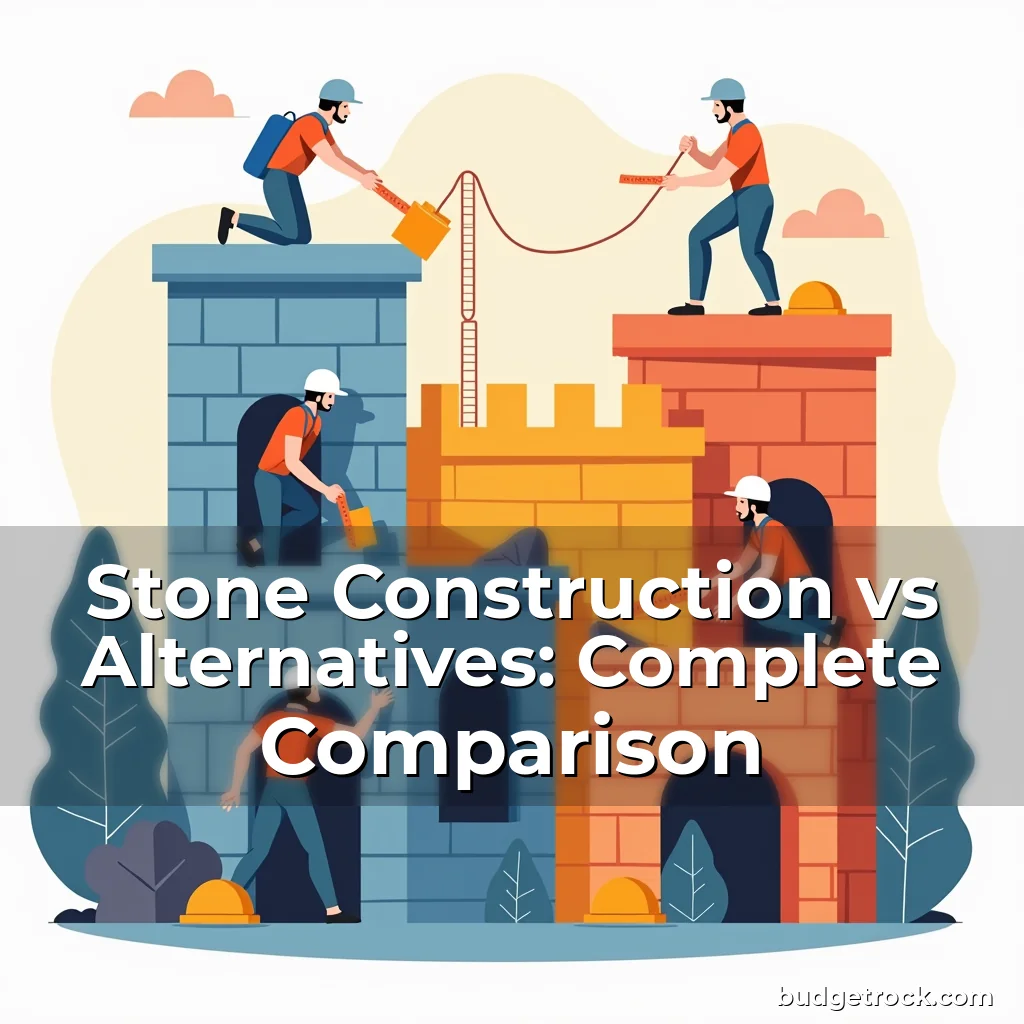
Stone Construction vs Alternatives: Complete Comparison
In today’s world of rising housing costs and fluctuating material prices, homeowners and builders alike are seeking durable, cost-effective solutions that stand the test of time. Stone construction, often overlooked in favor of cheaper materials, holds surprising potential for budget-minded individuals willing to think long-term. By comparing its strengths and weaknesses to alternatives like concrete, wood, and steel, we uncover whether stone truly delivers value—or if it’s merely a luxury reserved for the wealthy.
The debate over stone construction isn’t just about price; it’s also about sustainability, resilience, and aesthetic appeal. For the frugal homeowner, understanding when and where stone shines can mean the difference between overspending on frequent repairs and enjoying decades of low-maintenance living. Let’s dive deeper into this comparison.
Cost Analysis: Why Stone Might Surprise You
At first glance, stone construction appears far pricier than alternatives like brick or concrete block. A cubic meter of cut stone can range from $60 to $180, depending on type and finish, whereas concrete blocks typically cost around $5–$10 per unit. However, this upfront expense doesn’t tell the full story. Stone buildings often require less frequent replacement, repair, or painting, translating to significant savings over their lifetimes.
Labor costs further complicate the equation. Skilled masons trained in laying stone walls command higher wages than workers handling prefabricated panels or poured concrete. In some regions, hiring a team for a stone foundation may add 20% to the total project cost. Yet, this investment pays off in the form of a sturdier, longer-lasting structure that resists weather damage, rot, and pest infestations better than many alternatives.
- Material Cost: Natural stone varies widely—from granite ($60–$150/m³) to limestone ($40–$120/m³), with sandstone falling in the middle ($50–$100/m³).
- Labor Intensity: Laying stone requires precision and experience, increasing labor hours and associated fees compared to modular building systems.
- Maintenance Savings: Unlike wood, which rots or warps, or concrete, which cracks under pres
Consider a small garden wall: a concrete block version might cost $200 to build, while a matching stone wall could top $600. But after ten years, the concrete wall may need repointing, new mortar, or replacement due to erosion, while the stone wall remains intact with only occasional cleaning.
This long-term perspective shifts the narrative. If you plan to stay in your home for two decades or more, investing in stone becomes more economically viable—even if the immediate budget feels tighter.
Durability and Longevity: Stone’s Unmatched Strength
One of stone’s greatest assets lies in its ability to endure extreme conditions without degradation. Unlike wood, which decays over time, or metal, which corrodes, stone remains largely unchanged by rain, sun, wind, or temperature swings. This makes it ideal for foundations, retaining walls, and outdoor features exposed to harsh climates.
A study by the National Institute of Standards and Technology found that stone structures built in the early 19th century still stood strong in regions prone to earthquakes and severe storms. While modern concrete and reinforced steel offer comparable strength, they degrade faster under repeated stress, requiring periodic reinforcement or replacement.
Eco-Friendly Advantages Over Time
Beyond physical endurance, stone contributes to environmental sustainability. It doesn’t emit volatile organic compounds (VOCs) like paint or synthetic sealants, nor does it require chemical treatments to resist mold or insects. Its thermal mass properties also regulate indoor temperatures naturally, reducing reliance on artificial heating and cooling systems—a hidden benefit for frugal homeowners looking to cut utility bills.
Additionally, quarrying stone generates fewer carbon emissions than manufacturing cement or producing synthetic composites. While transporting heavy stone can increase fuel consumption, local sourcing mitigates this issue significantly. Choosing regional suppliers ensures shorter delivery times and reduces transportation-related expenses.
Structural Benefits: Load-Bearing Power and Stability
Stone’s density grants it exceptional compressive strength, making it perfect for weight-bearing applications like basement walls, pillars, and bridges. A single square foot of solid stone can support thousands of pounds of force before showing signs of strain—an attribute unmatched by lightweight materials like polystyrene insulation or fiber-reinforced plastic.
This stability extends to seismic performance. In earthquake-prone zones, engineers recommend incorporating stone into building designs to enhance lateral resistance. When paired with flexible joints and proper reinforcement, stone structures absorb shock waves effectively, minimizing risks of collapse during tremors.
However, it’s worth noting that pure stone lacks tensile strength—the ability to withstand pulling forces—which means it’s unsuitable for unsupported spans like ceilings or arches without internal supports. Reinforcing stone with rebar or embedding it in concrete mixtures can overcome this limitation, blending traditional craftsmanship with modern engineering techniques.
Design Flexibility: From Rustic Charm to Modern Elegance
Contrary to common misconceptions, stone doesn’t limit architectural creativity—it enhances it. With variations in color, texture, and grain patterns, natural stone allows for bespoke finishes that differentiate homes from cookie-cutter developments. Whether aiming for a rustic cabin feel or sleek contemporary lines, selecting appropriate stone types achieves visual harmony effortlessly.
Fine-grained marbles lend themselves to polished countertops and bathroom accents, while rough-hewn basalt or slate adds character to patios and walkways. Even artificial stone products mimic real rock convincingly at a fraction of the cost, offering versatility for DIY enthusiasts experimenting with budgets.
Moreover, combining stone with complementary materials expands design options further. Pairing terracotta tiles with smooth limestone facades creates dynamic contrasts, while integrating glass inserts into stone walls introduces light and transparency without compromising integrity.
Environmental Impact: Sustainable Choices Matter
Choosing sustainable building practices begins with evaluating raw material sources. Quarrying stone disrupts landscapes temporarily, yet responsible companies restore excavation sites post-mining, replanting native vegetation to minimize ecological harm. Compared to deforestation caused by timber harvesting or pollution from industrial processes linked to plastics, stone extraction presents relatively lesser environmental consequences.
Recycling old stone fragments into aggregate for road base layers represents another green strategy. Instead of discarding demolition debris, reusing crushed stone reduces landfill waste and conserves virgin resources. Communities adopting circular economy principles see substantial reductions in overall construction footprint.
Energy Efficiency Gains Through Thermal Mass
Thermal mass refers to a material’s capacity to store heat energy absorbed during daylight hours and release it gradually at night. High-density substances like stone excel at this function, stabilizing indoor temperatures year-round. During winter months, stored warmth prevents sudden drops in ambient air temperatures, reducing heater usage. Conversely, summer heat gets dissipated slowly instead of radiating back indoors.
Studies indicate that homes constructed partially from stone exhibit up to 20% improvement in insulation effectiveness compared to conventional frame houses insulated solely with fiberglass batts. This translates into measurable electricity bill savings for residents prioritizing fiscal responsibility alongside comfort.
Installation Challenges: What to Expect Upfront
While the end result promises lasting beauty and functionality, installing stone involves several hurdles that demand careful consideration. Proper site preparation is essential, including leveling ground surfaces thoroughly before laying foundation stones. Any unevenness leads to unstable bases which compromise entire wall systems over time.
Craftsmanship plays a pivotal role too. Mortar consistency must match intended bond strength, and curing periods shouldn’t be rushed regardless of schedule pressures. Rushed drying accelerates deterioration cycles prematurely, defeating primary objectives behind choosing enduring materials altogether.
Weather constraints pose yet another challenge. Rainfall soaking newly laid stones delays setting times unpredictably, extending completion timelines beyond planned durations. Protective covers shield work-in-progress until dry enough to proceed safely without risking water damage.
Maintenance Tips: Keeping Your Stone Investment Looking Great
To preserve both appearance and structural integrity, routine care routines become indispensable. Cleaning methods depend heavily on chosen stone variety—acidic cleaners work wonders on calcite-rich limestones but ruin softer dolomites susceptible to etching effects.
Regular inspection schedules detect micro-cracks forming along joints early enough to prevent expansion into larger fractures later. Applying high-quality sealants annually forms protective barriers against stains seeping deep beneath surface layers, especially beneficial near kitchens or bathrooms prone to spills regularly.
During colder seasons, preventing ice buildup inside crevices avoids freeze-thaw cycles damaging adjacent stones via expansive pressure changes occurring repeatedly whenever water freezes then thaws overnight.
Challenges Faced by Budget-Conscious Builders
Despite numerous advantages, certain limitations deter people pursuing stone construction primarily driven by economic concerns. Initial capital outlays remain steep relative to alternatives offering quicker return-on-investment timelines suitable for short-term rental properties or temporary shelters.
Sourcing affordable yet quality-grade stones poses difficulty in remote locations lacking nearby quarries or distributors carrying bulk orders. Transportation logistics incur added costs proportionate to distance traveled, sometimes negating supposed savings anticipated from opting for locally available rocks.
Lastly, expertise scarcity complicates matters further. Finding qualified contractors experienced specifically working with particular stone types proves challenging particularly among independent builders unfamiliar with specialized tools required accurately cutting curved edges or creating intricate decorative elements characteristic of premium installations.
Alternative Materials Revisited: Are They Truly Cheaper?
Concrete blocks present an attractive alternative mainly due to widespread availability and ease of installation. Their uniform shape enables rapid assembly processes completed within days rather than weeks needed constructing equivalent sized stone walls manually.
Steel frames provide unparalleled flexibility allowing open floor plans impossible achieving otherwise constrained by load-bearing requirements imposed traditionally through thick masonry constructions. Lighter weights facilitate easier transport operations across difficult terrain conditions previously inaccessible utilizing heavier stone components.
Wooden frameworks remain popular amongst eco-conscience consumers appreciating biodegradable nature eliminating future disposal problems arising from non-recyclable composite materials. Although subject to termite attacks and moisture damage threats, treating lumber sufficiently protects against biological degradation prolonging useful life expectancy considerably.
Final Thoughts: Making Informed Decisions Based On Priorities
Selecting between stone construction and competing options ultimately hinges upon individual circumstances dictating what matters most. Those valuing minimal long-range expenditures coupled with aesthetic appeal find stone appealing despite demanding greater upfront investments.
Conversely, individuals needing immediate results with limited funds prioritize expedient solutions delivering functional outcomes sooner rather than waiting extended periods justifying delayed gratification inherent involved acquiring stone-based infrastructure.
By weighing all factors comprehensively—including personal preferences, geographical location specifics influencing material choices, plus expected occupancy duration—one arrives equipped making prudent selections best aligned towards fulfilling distinct lifestyle aspirations efficiently financially responsibly.
Remember: true affordability stems not merely from lowest initial purchase price paid, but rather from lifetime ownership experiences measured in avoided maintenance charges, enhanced property values achieved maintaining original condition, plus environmental stewardship accomplished employing renewable resource utilization wisely.

news is a contributor at BudgetRock. We are committed to providing well-researched, accurate, and valuable content to our readers.