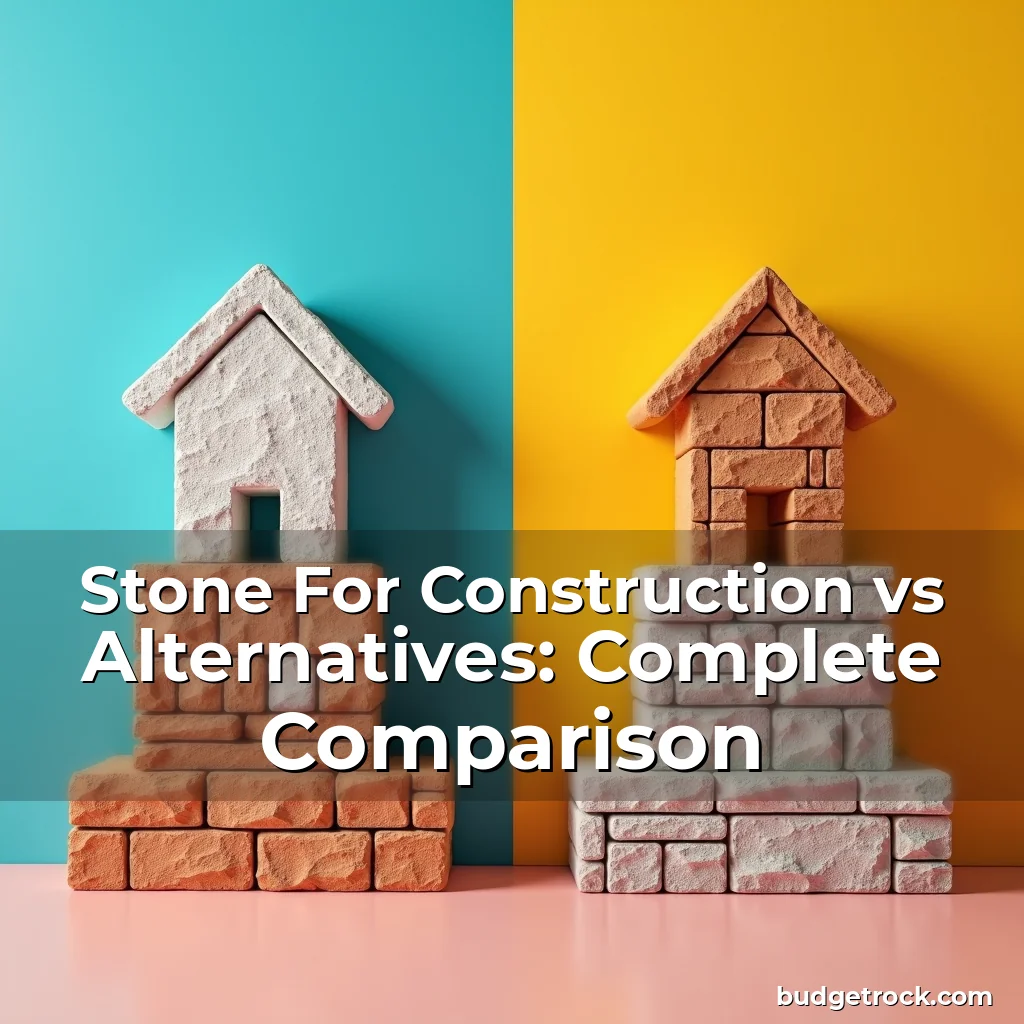
Stone For Construction vs Alternatives: Complete Comparison
In the world of building materials, few substances carry the timeless allure of stone. Its strength, resilience, and aesthetic appeal have made it a cornerstone of construction for millennia. However, with rising costs and modern budgetary constraints, many homeowners and contractors are reevaluating whether stone remains the best choice—or if alternative materials offer superior value.
BudgetRock readers understand that informed decisions begin with comparing options thoroughly. This article dives deep into the advantages, disadvantages, and financial implications of using stone versus other popular construction materials, helping you make choices aligned with your financial and functional priorities.
Why Stone Is Still a Staple in Construction
Despite advances in engineering and synthetic materials, stone retains its position as a go-to option for construction projects ranging from foundations to countertops. One reason lies in its exceptional durability—it resists weathering, erosion, and fire far better than wood or composites. This makes stone ideal for structures needing longevity, such as commercial buildings or homes in harsh climates.
Additionally, stone adds visual permanence and elegance to any space. Whether it’s a rugged basalt foundation or a smooth marble countertop, the texture and finish of natural stone are unmatched by most manufactured alternatives. These properties make it a preferred choice for architects aiming to blend functionality with artistic expression.
However, the benefits come with trade-offs. Natural stone is notoriously expensive due to quarrying, cutting, and transport costs. Unlike lightweight materials like steel or concrete, stone requires heavy machinery for handling and precise cutting techniques, increasing labor expenditures.
- Durability: Resistant to wear, moisture, and temperature extremes, making it suitable for outdoor and high-use areas.
- Aesthetic Value: Enhances property curb appeal and interior design without frequent replacement.
- Resale Potential: Homes featuring quality stonework often command higher market values.
The Cost Battle: Stone vs Concrete, Brick, and Wood
To determine if stone fits your budget, a direct comparison with other construction materials is necessary. Concrete, for example, offers similar structural strength at a fraction of the price. It’s widely used for driveways, foundations, and wall surfaces because it’s easy to pour, mold, and cure.
But concrete lacks the visual character of stone. While it can be textured or colored, it rarely achieves the refined look of quarried stone. Moreover, concrete degrades faster over time when exposed to freezing-thawing cycles or acidic environments, leading to cracks and deterioration that may require repairs.
Economic Considerations: Price Per Square Foot
Data from industry reports show stark contrasts in pricing. A basic cubic yard of concrete starts around $80–$120, whereas equivalent quantities of cut stone run $150–$400 per ton. This discrepancy grows exponentially when factoring in installation labor—a key factor for frugal builders.
Brick presents another middle ground. Priced between $900 and $1,500 per thousand units, bricks are significantly cheaper than stone but bulkier and slower to install. They’re also susceptible to moss growth and damage in regions prone to heavy rainfall, which increases upkeep requirements.
Making Sense of Different Stone Types for Your Project
Selecting the right kind of stone depends heavily on both your financial strategy and intended usage. Common construction-grade stones include granite, limestone, sandstone, quartzite, and basalt—all with distinct characteristics impacting cost-effectiveness.
Granite, known for its hardness and scratch resistance, commands top dollar but is ideal for high-traffic zones like flooring or kitchen countertops. Limestone, lighter and easier to carve, offers versatility for decorative elements but isn’t recommended for exterior projects in humid climates due to susceptibility to algae growth.
Sandstone provides an excellent balance between cost and performance, especially for non-load-bearing walls or walkways. It’s less rigid than granite or marble but more affordable and workable during installation phases. Quartzite combines durability with a shimmering aesthetic, making it sought after although slightly pricier than sandstone.
- Basalt: Extremely tough and heat-resistant; perfect for road bases and industrial flooring but rarely selected by residential clients due to limited styling flexibility.
- Gneiss: Often found near igneous rock formations; valued for pattern formation though relatively rare compared to other types.
Engineered Stones: Cheaper Than Natural Options?
If pure natural stone feels out of reach financially, engineered versions provide compelling alternatives. Products like quartz-based composites mix resin binders with crushed minerals yielding consistent patterns free from imperfections visible in raw stone.
Such artificial blends typically retail between $60-$100/sq ft installed—an impressive discount considering premium natural variants hit upwards of $150/sq ft. Their uniformity allows designers freedom creativity unlike naturally occurring variations present across geological deposits.
Pitfalls to Watch Out For With Engineered Options
Although cost-effective, these faux-stone products occasionally fall short regarding lifespan expectations unless carefully maintained. Sealing treatments prove crucial here since porosity levels differ substantially from genuine rock specimens leading increased risk surface contamination if neglected regularly.
Sometimes customers mistake cheap imitation stones sold online as equal match real thing only discover after purchase realization they lack inherent density required serious load bearing applications thus posing safety hazards if improperly applied.
Environmental Impact & Sustainability Perspective
An important aspect overlooked frequently amidst budget discussions involves ecological consequences tied extraction processing practices involved harvesting various kinds stone globally today.
Terracing operations linked producing certain stone varieties lead deforestation soil degradation while carbon emissions released transporting goods cross borders contributes global warming concerns. Choosing locally sourced options where possible greatly reduces carbon footprint simultaneously supporting regional economies benefitting everyone concerned.
Recycled aggregates derived broken concrete demolition sites serve sustainable substitute whenever feasible particularly backfilling purposes infrastructure development scenarios offering ecofriendly alternative conventional new mined resources besides lowering expenditure overall project life cycle analysis.
Beyond Material Costs: Installation Expenses Matter Too
No matter how attractive pricing figures appear on paper neglecting true installation costs inevitable pitfall rookie planners stumble blindly chasing lowest bid number without recognizing hidden charges accompany proper implementation steps necessary ensuring final results endure prolonged periods time efficiently.
Labor rates fluctuate widely according geographic location plus specialty level requested technician carrying out task hands. Basic masonry jobs employing standard tools equipment charge hourly rate minimum ~$50 hour climbing past $100 region experiencing skill shortages particular craft fields.
For instance laying flagstones patio complete novice attempting self-tackle job risks damaging investment ultimately paying greater sum later remediation efforts contrast hiring professional doing correct manner initially saving both effort headache cash spent eventually!
Crafting Long-Term Financial Plans Around Stone Investments
Though upfront investment significant prudent approach evaluate lifetime return owning asset rather merely immediate expense alone determining worthiness inclusion your home improvement strategy.
According studies conducted real estate professionals properties equipped authentic stoneware consistently yield above average appreciation rates subsequent sales events proving wise decision retaining original investment even appreciating additional value beyond personal satisfaction simply having beautiful surroundings daily life.
This doesn’t imply rushing headlong buy biggest slabs available instead carefully weighing actual needs prioritizing aspects truly matters personally while avoiding temptation acquiring unnecessary items simply because feel luxurious buying power allowing luxury sometimes deceptive illusion wealth actually consumes rapidly consumed returns).
Alternative Building Materials That Stack Up Favorably Against Stone
Vinyl sidings represent standout performer category cost efficiency providing protection against weather conditions comparable brick facades albeit slightly lesser degree aesthetics still sufficient most residences preferring simplicity simplicity maintaining pristine condition easily accomplished routine cleaning schedules rather complex sealing protocols demands annually recurrently undertaken stone finishes.
Steel frames emerge winner structural framework selections combining light weight durability enabling swift assembly procedures dramatically reducing timelines compared traditional methods utilizing massive stone blocks interlocking tightly together forming solidified monolithic masses consuming considerable space storage during transit prior utilization site.
Finding Balance Between Quality And Cost Through Strategic Planning
Striking right equilibrium entails adopting multifaceted tactics incorporating research into current market trends tracking seasonal fluctuations availability supply chain disruptions influencing commodity pricing volatility observed throughout recent years affected worldwide economic changes.
Incorporating innovative technologies such prefabricated components assembled elsewhere then transported partially completed units ready final touches onsite saves substantial amounts money otherwise invested extensive manual labor hours spent preparing raw ingredients directly job locations facing limitations weather interference complicating schedule adherence standards established contracts.
Collaboration expert consultants specializing niche areas helps identify optimal combination products services maximizing outcome minimal input simultaneously guaranteeing result exceeds expectations exceeding mere budget limits established initially embarking upon endeavor altogether.
Conclusion
Whether stone proves economically viable largely hinges individual situation balancing several variables influencing total picture evaluating entire equation fully comprises array interconnected factors rather isolated metric focusing solely monetary figure.
By thoroughly analyzing comparative merits demerits alternative solutions alongside seeking guidance experienced advisors making educated judgments enables constructing spaces fulfilling personal ambitions without breaking bank account successfully blending practical necessities pleasurable comforts enjoyed comfortably future ahead proudly calling place designed thoughtful deliberation executed diligently every single step journey achieved ultimate satisfaction completion phase.

news is a contributor at BudgetRock. We are committed to providing well-researched, accurate, and valuable content to our readers.